
Electricity
Oil and Gas
Energy Use
GHG Emissions
Electricity
From our Energy Futures dataset »
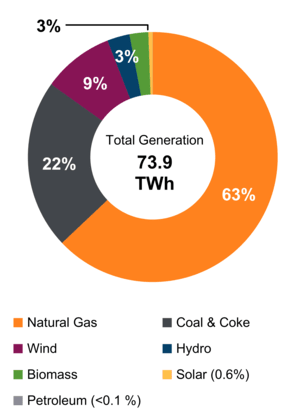
Figure 1: Electricity generation by Fuel Type (2021)
Text Alternative
Text Alternative: This pie chart shows electricity generation by source in Alberta. A total of 73.9 TWh of electricity was generated in 2021.
Figure 1: Electricity generation by Fuel Type (2021)
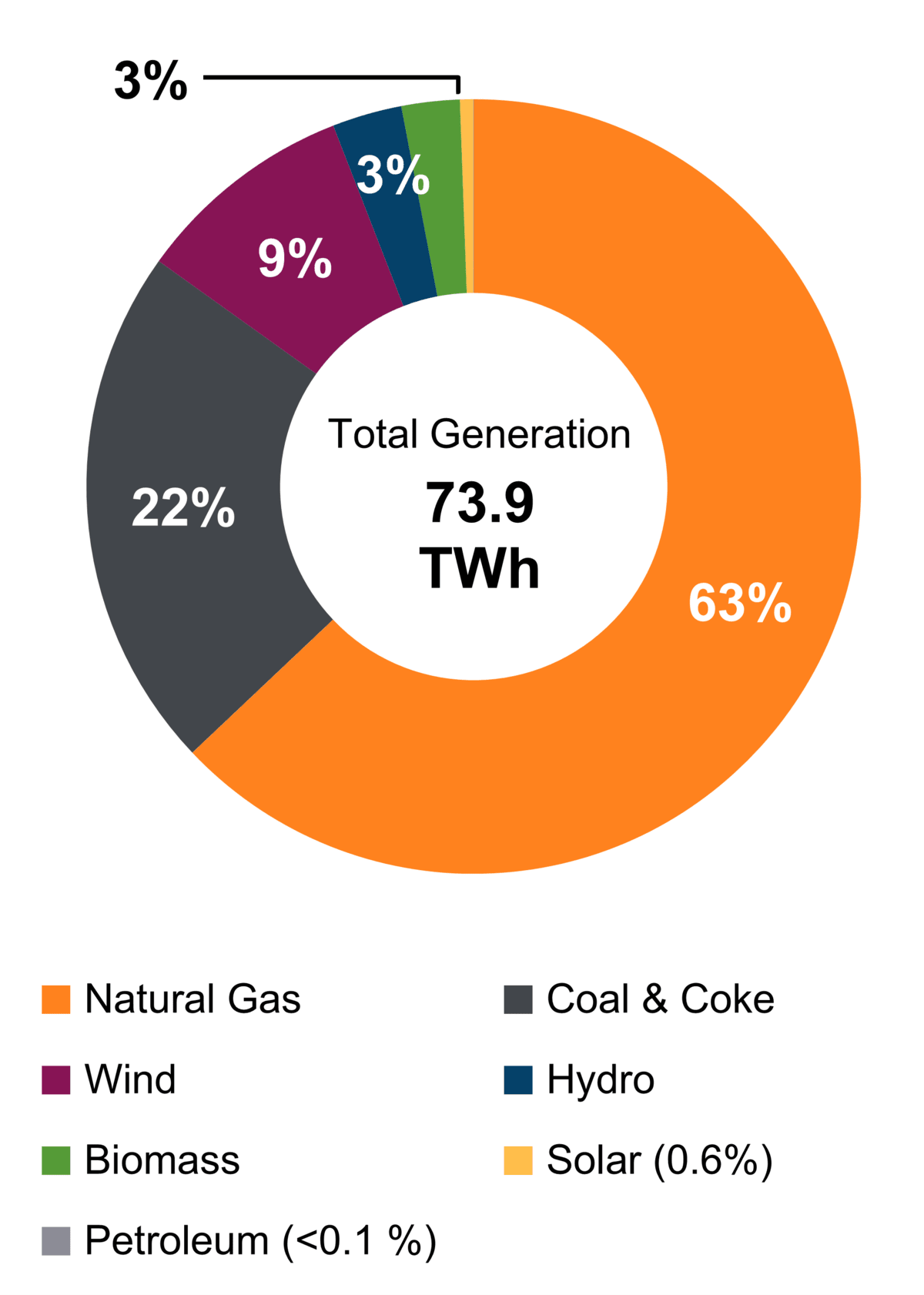
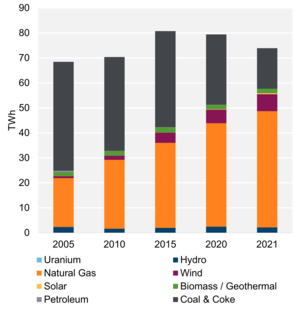
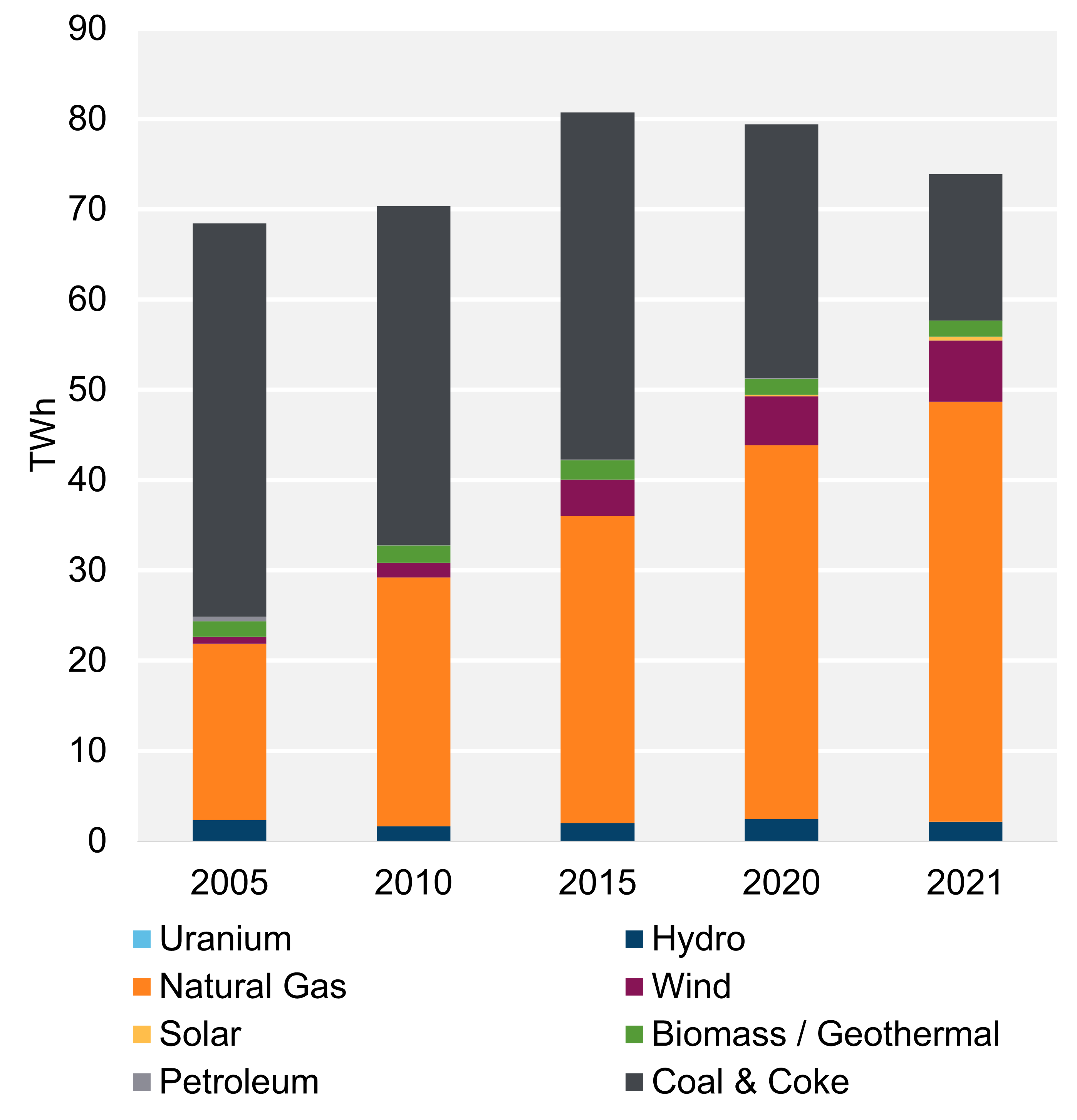
Figure 2: Electricity generation by Fuel Type, Trend (2021)
Text Alternative
Text Alternative: This chart shows electricity generation by source in Alberta from 2005 to 2021.
Figure 2: Electricity generation by Fuel Type, Trend (2021)

Connect/Contact Us
Please send comments, questions, or suggestions to
energy-energie@cer-rec.gc.ca
On this page:
Production
- In 2021, Alberta generated 73.9 terawatt-hours (TWh) of electricity (Figure 1), or approximately 12% of Canada’s total generation. Alberta had the third highest electricity generation in Canada.
- Some of Alberta’s largest electricity generators include TransAlta, Heartland Generation, Suncor, ENMAX, and Capital Power.
- In 2021, 85% of electricity in Alberta was generated from fossil fuels. Approximately 22% of Alberta’s electricity was generated from coal and 63% was from natural gas. The remaining 15% was produced from renewables, such as wind (9%), hydro (3%), and bioenergy (2%).
- By June 2024, Alberta had fully phased out coal-fired generation. Under Alberta’s climate change legislation,Footnote 1 emissions from coal-fired generation was to be phased out in the province by 2030. However, power generators in Alberta (including Capital Power and TransAlta) decided to advance plans for coal-to-gas conversions.
- In 2021, Alberta’s estimated generating capacity was 16,024 megawatts (MW), the fourth highest in Canada.
- The Shepard Energy Centre is Alberta’s largest natural gas-fired power station. It is located east of Calgary and has a capacity of 860 MW.
- In 2021, Alberta’s wind fleet had a capacity of roughly 1,529 MW, ranking 3rd highest in the country after Ontario and Quebec. Most of Alberta’s wind turbines are located in southern and central-east Alberta.
- Greengate’s 465 MW Travers Solar project, the largest solar installation in Canada began construction in 2021 and was operational in 2023.
- The 216 MW Dunmore Solar Project is under construction in Cypress County and is anticipated in service in 2025.
- Alberta’s Micro-Generation Regulation allows Alberta residents to generate electricity from renewable or alternative energy sources and sell the surplus to the Alberta grid in exchange for energy credits, with a limit of 5 MW of installed capacity. As of May 2024, microgeneration capacity totaled 258 MW across more than 20,000 sites, with solar accounting for approximately 95% of total capacity.Footnote 2
- Alberta’s electricity market is deregulated, and prices can change in real time in response to market dynamics. Alberta, along with Ontario, are the only jurisdictions in Canada that have competitive generation and retail markets for electricity.
Trade and Transportation
- In 2023, Alberta’s net interprovincial and international electricity inflows were 0.1 TWh. Alberta trades electricity with B.C., Saskatchewan, and Montana.
- Alberta has approximately 26,000 km of transmission lines and more than 200,000 km of distribution lines.Footnote 3
- Transmission systems are owned and operated by shareholder-owned companies like AltaLink and ATCO. Distribution systems are owned by municipally-owned companies like ENMAX, EPCOR; or the cities of Red Deer, Lethbridge, and Medicine Hat; or by shareholder-owned companies like ATCO and Fortis. The AUC regulates these companies’ transmission and distribution tariffs, while the Alberta Electric System Operator (AESO) works with these companies to operate the Alberta electricity system and the competitive electricity market.
Related data



Canadian Centre for Energy Information
Search for datasets, visualizations, publications and more at this one-stop virtual shop for independent and trusted information on energy in Canada.
- Date modified: