
CER’s Regulatory Framework
The CER’s Regulatory Framework provides the structure around which all of our regulatory activities take place. It includes the system of laws, regulatory documents and guidance used to regulate the parts of Canada’s energy industry that fall within our scope of authority.
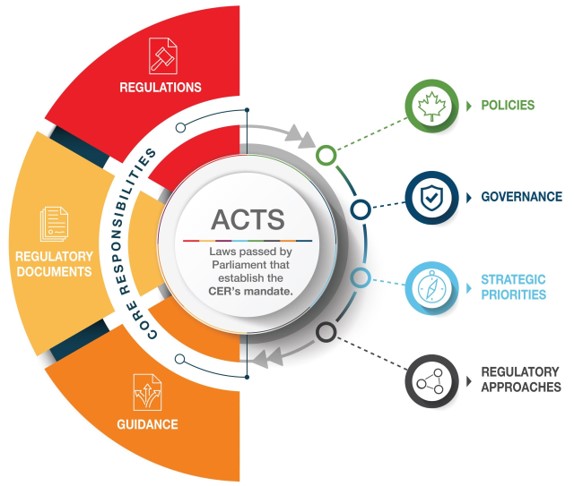
Laws: Provide the legal authority for the CER’s regulatory framework. These laws include specific requirements of companies and provide the CER with the authority to make regulations to implement our mandate.
Regulations: The regulations under the CER’s Regulatory Framework includes a mix of performance-based and prescriptive regulations. Prescriptive regulations outline specific requirements that must be followed. Performance-based regulations set out outcomes that a company must meet but provides flexibility in how to achieve them.
Regulatory Documents: Documents issued by the CER, the contents of which must be followed in the same way as law. These include authorizations/certificates (e.g. to construct/operate pipelines), orders, project conditions, commitments, findings, corrective actions, and orders/direction letters to regulated companies.
Guidance: Documents and other products that help regulated companies, Indigenous Peoples, landowners, interested parties, and the general public understand our regulatory requirements and to promote compliance.
Onshore Pipeline Regulations:
The primary regulations by which the CER ensures companies manage safety, security and environmental protection throughout the entire lifecycle of their facilities, from design, through to construction, operation and abandonment.
Filing Manual:
Provides guidance for companies on when a filing is necessary and outlines the information typically needed in applications.
- Date modified: