
Rules of Practice and Procedure
Summary Report
Rules of Practice and Procedure - Summary Report [PDF 1461 KB]
September 2025
Table of Contents
- Introduction
- Background
- Engagement Approach
- Summary of Written Comments
- What’s Next
- Appendix I: Out of Scope Comments
- Appendix II: Discussion Paper
- Appendix III: Submitters of Written Feedback
Introduction
The National Energy Board Rules of Practice and Procedure, 1995 (the Rules) govern the procedures to be followed during written or oral hearings of the Commission of the Canada Energy Regulator (CER), previously the National Energy Board. Among other things, the Rules set out the mechanisms for complaints, the conduct of hearings, and determine the manner in which applications are to be assessed. The Rules are made by the Commission under section 35 of the Canadian Energy Regulator Act (CER Act). In general, the Rules apply to all “proceedings” before the Commission. This includes a range of situations where the Commission must make a decision, including written or oral hearings. The Rules are meant to help parties understand how to participate effectively and what to expect during hearings.
In September 2024, the Commission of the Canada Energy Regulator (CER) launched a review of the Rules. The objective of the Rules Review is to deliver regulations that:
- align with the CER Act, including the objectives outlined in the Act’s preamble, such as the commitment to Reconciliation;
- enhance competitiveness through predictable and timely processes; and
- modernize practices and procedures.
The Rules have lasted over 30 years due to the flexibility they offer to conduct hearings effectively. In this Rules Review, the Commission aims to identify incremental and practical amendments that still preserve the flexibility to address the topics in the report.
A Discussion Paper (reproduced in Appendix II) describing the type and scope of amendments that are being considered was released on 9 September 2024. The Paper included 21 discussion questions, related to the three regulatory objectives, to guide written feedback.
This Summary Report (Report) was prepared to reflect the comments received during Phase I of engagement. The Report is organized, like the Discussion Paper, by the three regulatory objectives for the Rules Review. Two general questions also offered the opportunity to provide feedback on topics of interest that were not explicitly requested in the Discussion Paper. The Report will share these comments under the title Other Feedback.
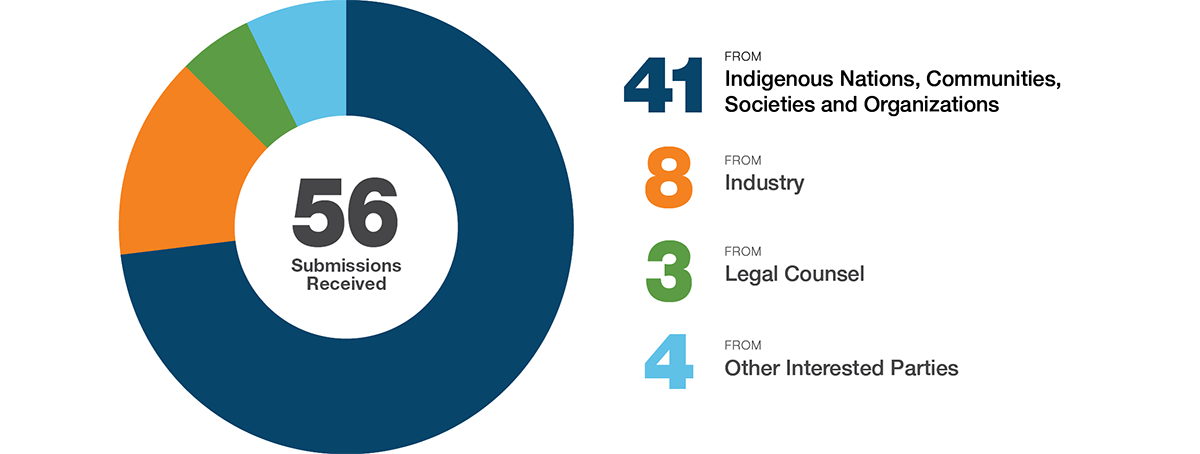
We received 56 letters of comment; 41 from Indigenous Nations, communities, societies and organizations, eight from industry, three from legal counsel and four from other interested parties. Submitted feedback may be viewed on the CER Dialogue/Rules website.
The Report reflects the diversity of perspectives shared. The Report does not intend to address every comment received; however, we have tried to acknowledge the varying perspectives that were shared with us. Where applicable, we have attributed comments to the group or organization who submitted the comment.
For this update, the Commission, supported by CER staff, will focus on specific practices, procedures, and processes that can be improved in the Rules and supporting guidance. Many elements of the existing Rules were not mentioned in the feedback received, however will still need to be updated to reflect the changes that have occurred since the Rules were first put in place 30 years ago. Many of the written comments dealt with matters were beyond the scope for the Rules Review, on topics such as base level capacity funding and participant funding, Indigenous Ministerial Arrangement Regulations (IMARs), Onshore Pipeline Regulations, and Filing Manual updates. We have included a table of the topics of the out of scope responses in Appendix I with an explanation as to why the topic is not applicable to the Rules Review. Additionally, we have provided these comments to relevant CER teams working on those areas to help inform and shape their work. The relevant and in-scope comments will be considered in the next phase of the Rules Review, as the drafting process begins.
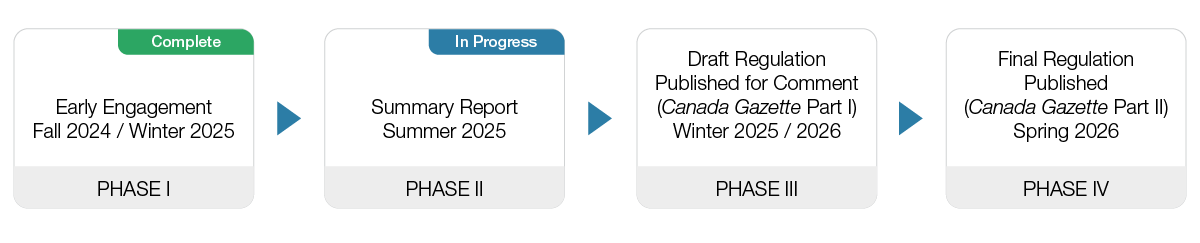
There are four phases to the Rules Review (see graphic below). Phase I, early engagement on the Discussion Paper, concluded on 31 January 2025. Phase II of this project involved drafting this Report. Interested parties are welcome to provide comments on the Report until 19 November 2025. Phase III is anticipated for winter 2025/2026 and will consist of pre-publishing the draft regulations in Canada Gazette, Part I for a public comment period.
Description
The four phases of the Rules Review are depicted. Phase I Early Engagement is complete, Phase II Summary Report is in progress and scheduled to be complete in Summer 2025, Phase III is draft regulations in Canada Gazette, Part I (Winter 2025/2026) and Phase IV is the final regulations published in Canada Gazette, Part II in Spring 2026
The Commission sought feedback from Indigenous Peoples, companies, and other interested parties on a Discussion Paper. Phase I Early Engagement concluded 31 January 2025.
A summary of what we heard in Phase I of the engagement will be posted for comment, along with all submissions received.
The draft amended Rules will be pre-published in Canada Gazette, Part I, allowing interested parties to review and comment on the draft regulatory text.
The final regulation will be published in Canada Gazette, Part II.
If you have any feedback, questions or comments, please contact us at RPPR@cer-rec.gc.ca.

Background
The Rules Review
The Commission, supported by CER staff, is undertaking a comprehensive review of the Rules. The Commission is committed to ensuring that its work, and the decisions it makes, are informed by diverse input from people across Canada. Engagement on federal regulatory development initiatives is informed by the Government of Canada’s Cabinet Directive on Regulation, which calls for meaningful consultation and engagement with Indigenous Peoples and impacted stakeholders throughout the development, management, and review of regulations.
During Phase I, we held information sessions and sought written feedback on a Discussion Paper with questions for consideration relating to potential amendment areas and improvements to the Rules. Through the Discussion Paper, we also invited feedback on any topic not covered by the discussion questions. Phase I had an initial comment period from 9 September 2024 to 9 December 2024. On 3 December 2024, we received letters from Canadian Natural Resources Limited and the Canadian Association of Petroleum Producers requesting extensions to submit their comments. On 6 December 2024, we notified all parties that the CER would extend the comment period from 9 December 2024 to 31 January 2025, via email, the CER website, and CER Dialogue webpage.
Through this Report, which represents Phase II of the Rules Review, we have summarized the comments received during Phase I of engagement. People can comment on this Report or provide any additional feedback they would like us to consider until 19 November 2025.

Engagement Approach
At the beginning of Phase I, we distributed an Engagement Design Survey to Indigenous Peoples, legal counsel, government departments, companies, industry associations, landowners, and others who had familiarity with CER adjudicative processes, to seek feedback on how they would like to be engaged (e.g., written communications, small meetings, workshops). The majority of people that responded to the survey asked that the CER hold virtual information sessions on the Rules. In addition to the Engagement Design Survey, we also communicated our plan to engage on the Rules Review broadly via the CER website, an online engagement platform (CER Dialogue), social media (including X/Twitter | Facebook | LinkedIn), and the Government of Canada’s Consulting with Canadians website, to encourage interested parties to become involved.
Information Sessions
We hosted three virtual information sessions, taking into consideration the time zone differences across Canada to facilitate attendance. These sessions were structured to firstly provide an overview of the CER, the Rules Review, and the Discussion Paper topics, and secondly to offer a forum for participants to ask questions and/or have discussions. A total of 96 participants attended these sessions.
Funding for Indigenous Peoples
Indigenous communities, partners, organizations, or representatives of a community who had a direct interest in the Rules were able to apply for funding to support their participation in the Rules Review. Eligible applicants received a grant of $6,000. In total, 39 Indigenous communities were provided funding via the CER grants and contributions program.

Summary of Written Comments
Who we heard from
A total of 56 written submissions were received from Indigenous Nations, communities, societies and organizations, companies, and other interested parties. For a complete list of the participants that provided written feedback, please see Appendix III.
Description
There were 56 submissions received. 41 from Indigenous Nations, Communities, Societies and Organizations, eight from Industry, three from legal counsel and four from other interested parties.
The following sections summarize the comments received in response to the Discussion Paper released during Phase I of the Rules Review.
Theme 1: Align the Rules with the CER Act, including the objectives outlined in the Act’s preamble, such as the commitment to Reconciliation
The Discussion Paper requested feedback on what changes are required to reflect new or amended authorities that were provided to the Commission through the CER Act, along with additional minor administrative updates such as terms and section number changes.
Compensation and Cost Apportionment
“Compensation for Indigenous Nation should not be solely based on monetary value, as it often does not adequately reflect the loss of cultural, spiritual, and environmental values tied to the land.”
Montana First Nation
The CER Act grants authority to the Commission to decide compensation (sections 327 and 334) and cost apportionment (paragraph 335(4)(g)) disputes. These processes are supported by guidance but not reflected in the Rules.
The feedback regarding cost apportionment and compensation applications focused on flexibility, efficiency, and clarity. The Alberta Department of Energy and Minerals suggested that the Rules provide administrative updates that provide certainty or create clarity and ensure coherence of process steps. As an example, they note that “clarifying the compensation and cost apportionment timelines is beneficial to ensure process certainty for project stakeholders and proponents, but its incorporation in the Rules must not inappropriately increase the requirements of these parties beyond what is recommended by the guidance provided.”
Willow Lake Métis Nation proposed to have a formal set of processes to allow impacted individuals and organizations to identify themselves, the impacts to their property rights and to provide an estimate of appropriate compensation. Some other specific suggestions for process steps included having an early evidence exchange and allowing for an entirely written process in some circumstances.
Specific to compensation applications, commenters requested that the Commission focus on clarity in the process steps and guidance. The Mississaugas of Scugog Island First Nation provided the following recommendations for process steps and guidance:
- Mandate applicants (e.g., companies) to notify Indigenous communities of cost apportionment or compensation applications in a culturally appropriate manner.
- Create Alternative Dispute Resolution processes that incorporate:
- Mediators with cultural competency in Indigenous legal traditions and worldviews.
- The option for Indigenous communities to use traditional decision-making methods or circle-based mediation processes.
- Include a step for the CER to provide education and training to Indigenous communities on navigating cost apportionment and compensation processes.
The recommendations from the Mississaugas of Scugog Island First Nation have also been shared with CER Hearing Process Advisors to help shape their role in supporting the public and Indigenous Peoples who want to participate in adjudicative processes.
Some of the comments provided are already reflected in the Guidance on land-related compensation disputes which can be found at: Guidance on land-related compensation disputes. However, we will consider amendments to the Rules that provide more clarity, through specific process steps, while retaining flexibility and scalability.
Reconciliation and Implementation of the United Nations Declaration on the Rights of Indigenous Peoples
The Commission is considering what changes may be needed to ensure that the Rules are aligned with the CER Act’s objectives and preambular statements related to achieving Reconciliation and implementing the United Nations Declaration on the Rights of Indigenous Peoples (UN Declaration).
Grand Council Treaty #3 commented that the Rules must respect Indigenous laws and processes and have the flexibility to harmonize CER processes with Indigenous processes. Kebaowek First Nation suggested that the Rules should require that hearings be conducted in a way that incorporates Indigenous legal traditions, protocol, and ways of knowing, and that the Rules should allow for hearings to occur in the Indigenous communities that stand to be impacted by a decision of the CER.
On participation of Indigenous Peoples, Driftpile Cree Nation, Sucker Creek First Nation, Whitefish Lake First Nation, and Louis Bull Tribe collectively provided feedback that participation rights for intervenors should distinguish between Indigenous communities and private individuals, and that “the Commission should establish a distinct category of participation for Indigenous groups” and “such rights of participation should be developed collaboratively by the Commission in consultation with Indigenous groups.” The Fort St. John Métis Society recommended that process steps should be “streamlined to remove perceived barriers to Indigenous participation,” including processes that are both transparent and inclusive, and that support the participation of Métis and other Indigenous communities. Lakeland Métis Nation suggested that Indigenous communities should be given adequate time to review proposals, consult with members, and submit responses.
The Commission acknowledges these comments and will consider amendments to the Rules that continue to allow flexibility in the hearing process and continue to allow full participation by potentially impacted Indigenous Peoples. Regardless of amendments to the Rules, the Commission will continue to be guided by its mandate in the CER Act. For example, section 56 requires the Commission to consider any adverse impacts to Indigenous Peoples in any decision it makes and section 183 requires it to take into account any Indigenous knowledge shared.
Indigenous Knowledge
In general, we received comments that there is an important relationship between Indigenous knowledge and Indigenous laws and legal traditions. The sharing of Indigenous knowledge is a gift, so it is important for the CER to acknowledge and appreciate the importance of communities sharing their Indigenous knowledge with us. The Commission has evolved its processes for receiving Indigenous knowledge over the years and some suggestions reflect ideas that the Commission has already implemented, but the comments also reflect areas where the Commission can continue to evolve. The main themes of comments relating to sharing Indigenous knowledge pertained to protecting confidentiality of Indigenous knowledge under section 58 of the CER Act, the processes associated with sharing Indigenous knowledge, and how both can be reflected in guidance.
Commenters indicated there should be clear procedural safeguards related to protecting confidentiality of Indigenous knowledge. This would include using the information only for the purpose for which it was shared, protection from unauthorized use, recognizing that Indigenous Peoples retain control over its use and its sharing, and provide the ability to decline sharing Indigenous knowledge or withdraw it if those sharing are not in agreement with how Indigenous knowledge is to be disclosed. We also heard about a need to protect the Indigenous knowledge that will be disclosed online, especially under new online systems, to safeguard sensitive cultural information. This includes allowing Indigenous Peoples the option to prevent the sharing of their Indigenous knowledge online.
Regarding the process to share Indigenous knowledge, we heard about the need for flexible, clear, transparent, and culturally appropriate processes to facilitate respectful sharing of Indigenous knowledge that remove barriers to the participation of Elders and knowledge keepers. There were suggestions to incorporate ceremonies and protocols in CER processes and/or allow for cultural and spiritual practices (such as drumming, prayers, smudging, etc.) to take place prior to oral evidence. We also received comments about making accommodations for Indigenous Peoples, particularly around the timing and availability of Elders and knowledge keepers. Also, we heard how the CER could make the process of sharing Indigenous knowledge safe, such as having culturally safe settings, smaller hearings with no proponent lawyers present, and the use of Indigenous languages. The comments about culturally safe settings are important as the Indigenous Caucus of the Trans Mountain Indigenous Advisory and Monitoring Committee submitted that “there is legitimate concern that Indigenous knowledge keepers will be placed in a forum where they may be disrespected or discounted.”
The CER Act mandates the consideration of Indigenous knowledge as a formal legislative requirement, for example in subsection 183(2). The CER already considers Indigenous knowledge during adjudicative processes; however, how Indigenous knowledge is shared with the Commission has evolved over the years. The objective of the Discussion Paper questions on Indigenous knowledge was to understand how to maintain flexibility and ensure procedural fairness. Section 58 of the CER Act also introduced specific provisions for protecting the confidentiality of Indigenous knowledge, when requested. This provision, alongside the Government of Canada’s Indigenous Knowledge Policy Framework for Project Reviews and Regulatory Decisions, is considered when setting processes related to Indigenous knowledge. For the current Rules Review, we will consider Rules that assist participants with confidential sharing of Indigenous knowledge and retaining the flexibility to create culturally appropriate processes.
“To best provide and protect Indigenous knowledge, we suggest that hearings and feedback sessions be conducted in-person. Meetings relating to Indigenous knowledge could be made separate from hearings and be conducted over multiple meetings/engagements with smaller groups based on factors such as community bases, location, etc.”
Peavine Metis Settlement
Crown Consultation
For matters before the Commission, the hearing process is the primary forum for Crown Consultation with Indigenous Peoples. For matters where the CER has determined that supplemental Crown Consultation is appropriate (generally for projects where the Commission is not the final decision maker), the CER’s Crown Consultation Coordinator (CCC) conducts additional consultation with Indigenous Peoples to supplement the Commission’s hearing process. Given that the role of the CCC is relatively new, the Discussion Paper questions explored whether and how the role of the CCC in Commission hearings should be addressed in the Rules.
Many commenters provided input on the role of the CCC, the nature of its participation in Commission hearings, and whether or how that should be reflected in the Rules. We heard from several commenters about the importance of maintaining the CCC’s neutral role, however, the Métis Nation of Alberta Association Fort McMurray Métis Local Council 1935 commented that the “neutral role for the CCC eliminates most of its potential usefulness” and that the “CCC should be empowered to represent the Crown” and work directly with potentially affected Indigenous communities in the development of potential mitigations and accommodation measures.
Several submissions provided suggestions for the role of the CCC, including its direction, mandate, and authority. For example, the BC Métis Federation commented that “the Crown Consultation Coordinator should be included in the actual rules with a specific legal recognition to present their views on engagement, issues, and concerns relative to the BC Métis Federation consultation process.”
There were many calls for the role of the CCC to be formalized in the Rules; for example, Trans Mountain Pipeline ULC submitted that the Rules should provide clear guidelines on the CCC’s roles and duties. Foothills First Nation noted that reflection of the role of the CCC within the Rules would “provide clarity, transparency, and accountability as to how Crown Consultation obligations are integrated into regulatory processes.” Conversely, South Bow raised a potential issue with defining the role of the CCC within the Rules, noting that “embedding requirements in the Rules for a role that has not yet been fully scoped out may result in inadvertent requirements for a role that continues to develop.”
We received several recommendations which were technical in nature, including Line 3 Indigenous Advisory and Monitoring Committee Indigenous Co-Chair’s comment that notices should provide a map that includes Treaty Area and Indigenous communities impacted and Manitoba Métis Federation’s comment that submissions on topics relating to section 26 of the Rules should be accepted in any reasonable form, not just written submissions.
All feedback received related to the CCC has been shared with the CER CCC team for awareness and consideration. Many differing perspectives on the CCC’s role were shared with the Commission, including the need for further consultation before adding specific rules related to this role. The Commission will consider where it would be more helpful to offer guidance documents that will assist with clarity of the CCC role and allow more opportunities for the role to evolve.

Theme 2: Enhance competitiveness through predictable and timely processes
Hearings Pursuant to the COGOA
The Rules require updating to be reflective of and consistent with current processes, which have changed since the Rules were first brought into effect 30 years ago. For example, the Rules do not have specific provisions for when the Commission holds hearings pursuant to the Canada Oil and Gas Operations Act (COGOA). Updating the Rules provides an opportunity to design the processes used in those hearings as well.
Feedback received recommended that we consider potential mechanisms to combine, or at a minimum align, processes between regulators to enable efficiencies where possible. We should avoid unnecessary duplication, including conditions and post-approval processes. In addition, Osler LLP suggested expanding Part I of the Rules to include hearings under COGOA for variances to operating authorizations and adding rules for evidence and when affidavits are required. The Montana First Nation requested that Indigenous Peoples be included in setting the process for hearings and timelines to ensure thorough consultation is conducted.
Streamlining Processes
An important aspect of the Rules Review is to improve and streamline processes to enhance competitiveness. This includes clarifying calendar days as opposed to business days and examining whether timelines could be adjusted to better reflect the effort required to complete a process. As such, the Discussion Paper specifically considered:
- Making changes to modernize the notice of motion procedure (Rules section 35) to support efficiency, including the use of oral notice of motion processes where appropriate.
- Whether the existing process for fixing costs related to detailed route hearings (Rules sections 53-54) requires updates and if it can be applied to other instances where parties require a Commission decision on costs.
- Whether there are processes that have become standardized enough that they could be written into the Rules to create continuity, efficiency, and certainty for interested parties.
- Whether specific changes could be made to the information request process (Rules sections 32-33) to clarify how it is used and to support efficiency.
- Where learnings or rules can be applied from other regulators and tribunals to support efficient processes.
Streamlining pre-hearing processes, hearing processes and completeness of applications
Driftpile Cree Nation, Louis Bull Tribe, Sucker Creek First Nation, and Whitefish Lake First Nation collectively commented that “...participants in CER proceedings do not have a clear understanding of which pre-hearing process steps may be available on a hearing-by-hearing basis. This question is left to the discretion of the Commission in each particular proceeding, which creates uncertainty for participants who are left to rely on the guidance of precedents set by previous Commissions in previous CER proceedings.” They provided the example of several separate comment processes that were undertaken prior to the issuance of hearing orders in the CER proceedings for the Pouce Coupé Line Ltd. Taylor to Gordondale Pipeline Project and the Westcoast Energy Inc. Sunrise Expansion Program. In addition, they requested that the CER incorporate pre-hearing process steps that could include a comment process or workshop on the draft timetable and list of issues, as well as a comment process or workshop on the completeness of the application. Enbridge Inc. also stated that the Rules should address the completeness decision and that the Commission should share how they determine an application is complete. Enbridge Inc. added that application completeness assessments and leave to open and reactivation application decisions should be set out in the Rules because they help with transparency and are critical to delivering timely service to shippers, which supports competitiveness.
The Lower Mainland Municipalities also provided several recommendations pertaining to hearings that included defining categories of participants within the Rules, providing companies with requirements for their responses to information requests and providing local governments status to cross examine. Foothills First Nation commented that the Commission processes should align with the CER’s commitment to Reconciliation, the implementation of the UN Declaration, and the principles of free, prior, and informed consent.
The Commission has a unique, independent adjudicative context that requires consideration of multiple factors and inputs (i.e., from Indigenous Peoples, landowners, municipalities, shippers, etc.) to carry out its decision-making authorities. The comments received in relation to streamlining related to topics that are addressed in different tools, including the Filing Manual and other guidance documents. In particular, the expectations for complete applications are detailed in the Filing Manual, so the comments related to this topic were shared with the team responsible for Filing Manual updates.The Commission will consider these comments, including those related to the UN Declaration, and how best to incorporate suggestions into the various available tools.
Indigenous-Led Processes
We received comments from multiple parties to include Indigenous-led processes. For example, Horse Lake First Nation suggested having a First Nation panel that would run parallel with Commission’s processes and be paid for by Canada, incorporating Indigenous governance structures and decision-making systems, and to have Indigenous-led reviews and assessments. Additionally, some commenters asked to integrate sections 56 to 59 into the Rules with discretion and guidance from Indigenous Peoples. To the extent that sections 56 to 59 relate to procedure, we will consider how best to offer clear guidance on how those aspects can be incorporated into Commission processes.
Some comments received on this topic made suggestions beyond the scope of the Rules Review, but the Government of Canada is advancing several other initiatives that could address these comments as part of the United Nations Declaration on the Rights of Indigenous Peoples Act (UNDA) Action Plan. The UNDA Action Plan includes measures specifically related to working in consultation and cooperation with First Nation, Métis and Inuit communities, governments and organizations to enhance the participation of Indigenous Peoples in the CER’s regulatory activities and authorities. For example, Natural Resources Canada (NRCan) is currently tasked with developing the IMARs contemplated under section 78 of the CER Act. IMARs would provide a regulatory framework for the Minister of Energy and Natural Resources to enter into arrangements that would enable Indigenous governing bodies to exercise specific powers, duties and functions under the Canadian Energy Regulator Act. NRCan has engaged with over one hundred Indigenous communities across Canada on IMARs and will be sharing a What We Heard Report based on this engagement with communities and the public in the coming months. Further engagement on IMARs is planned for Fall 2025 and Winter 2026, with the goal of drafting a regulatory proposal in consultation and collaboration with Indigenous communities and leaders who are interested in this work.
The remaining feedback on Indigenous-led processes is summarized in the table in Appendix I.
Notices of Motion and Oral Notices of Motion
Comments related to notices of motion addressed efficiency, transparency, and both oral and written processes. Participants commented that it is appropriate to change the Rules to reflect current practice, as long as it does not create additional administrative or regulatory burden. For example, some participants supported adding a Motions Day in a hearing to promote regulatory efficiency. Pembina Pipeline Corporation suggested a response time for a notice of motion should be circumstance-specific, with ten business days as the default. Support for written processes included clarifying that submissions could be made electronically and that oral motions would only be made with justification of why the written process was impractical or impossible in the circumstances.
Montana First Nation suggested that Indigenous Peoples should be allowed to present motions orally, are adequately resourced and informed to participate and, that the Rules should ensure that the notice of motion is transparent. For oral notices of motion, timelines should allow consideration of urgent motions but still be set to allow opportunities to respond and create space for Indigenous Peoples to voice their concerns through traditional methods. Clarity around how written and oral processes work together is also important to be included in the Rules.
Timelines
We asked for feedback on the timelines set in the Rules, any additional timelines that could beadded to the Rules, or the approach for computation of time. The feedback we received reflects a strong desire for balance between efficiency, clarity, and meaningful engagement. Parties emphasized the importance of predictable and timely processes, cautioning that proposed extensions could undermine competitiveness – such as the concern that longer timelines may deter investment. At the same time, there was broad support for flexibility, particularly to accommodate emergencies, seasonal constraints, and the capacity of Indigenous Nations and communities. For example, Grand Council Treaty #3 suggested, “timelines in the new Rules that potentially affect Indigenous communities must be flexible and adaptive. One mechanism to consider is collaboratively determining timelines with participating Indigenous communities.”
Amongst the comments referring to timelines, Enbridge Inc. suggested that the Rules should formalize the current requirement in the Filing Manual that project proponents must file a project notification at least 2 months in advance of any CER Act section 214 project application and 4 months in advance of any CER Act section 183 project application. Additionally, Enbridge Inc. commented that it was unreasonable to take more than 30 days to assess completeness of an application especially when given ample notice through mandatory project notification. Beaver First Nation noted that “the Rules must consider First Nation timelines for reviewing and responding to CER related projects.” The Métis Nation of Ontario also commented on the timelines saying that “the CER and the Commission must consider how the computation of time is completed in the first place and how this computation is weighted. Currently this consideration is more heavily weighted to project applicants and their needs; and must be more inclusive of Indigenous considerations.”
Fixing costs related to detailed route hearings
“The term ‘reasonably incurred’ as mentioned in section 53 of the Rules necessitates clarification, including definition of eligible costs. The current lack of definition does not support collaboration between parties and a proponent.”
Trans Mountain Pipeline ULC
Feedback on the current process for fixing costs related to detailed route hearings, with the aim of enhancing competitiveness and through predictable and timely processes, demonstrates a need for improved clarity on what constitutes a cost and what “reasonably incurred” means. Foothills First Nation stressed the need for simplification of cost claim processes and for proponents to respond more quickly to ensure processes are inclusive, transparent, and align with the goal of Reconciliation. Some comments also brought to light a potential misunderstanding where respondents may not be aware that the process for fixing costs for detailed route hearings is separate from the Participant Funding Program. This feedback was shared with the CER’s Grants and Contributions team.
Cultural Intelligence in Commission Processes
We also received comments about the ways the Commission could include cultural intelligence into its processes, such as:
- Add clear steps for including oral traditional evidence “in ways that respect our traditions.” (Elk Valley Métis Nation).
- Kelly Lake Cree Nation noted that the Rules has no mention of Indigenous Peoples.
- Acknowledge that formal adjudication and hearing processes can be intimidating and triggering for Elders as it represents a colonial process that is not responsive to Métis cultural ways (Lac Ste. Anne Métis Community Association).
- Co-define certain aspects of the process such as location, room setup, or opportunity for ceremony and/or opening the session in a good way.
- Co-exist with long traditions e.g., oathtaking with an eagle feather, Elder praying in their language, smudging.
- Interpreter for speakers who want to speak their language.
- Lead Commissioner should offer appropriate protocol to Indigenous leaders and Elders who provide opening/closing remarks, oral interventions.
- Room layout should be in a traditional circle respecting that we are all on the same level.
- Indigenous oral intervenors should be able to hold an eagle feather while speaking to the Commission..
- Adequate time should be given to Indigenous intervenors – timers and clocks should be refrained.
- Indigenous intervenors and their teams should be given a dedicated space in the hearing room with tables, chargers, and refreshments.
Lastly, there were many comments submitted on the processes for engaging with Indigenous Peoples. The Friends of Michel Society (FMS) noted that the CER proposed, during a virtual information session, that consultation with Indigenous Peoples would be better captured in guidance to allow for flexibility. FMS disagrees with the CER as given that guidance documents are not legally binding and not enforceable: “In FMS’ experience, even when concerns on meaningfulness or adequacy of proponent engagement is raised with the regulator, there is very little that the regulator is willing or able to do to address these concerns.” The Makwa Sahgaihcan First Nation remarked that the updated Rules must set out minimum requirements for how Indigenous Peoples should be consulted and involved and to leave the rest to guidance documents.
The Commission has incorporated many of the suggestions into its recent hearings.. However, the Commission is committed to continuous improvement and will consider how to incorporate more cultural intelligence into the Rules. With respect to the duty to consult and accommodate, the Commission will continue to be guided by court decisions and legislation. Meaningful engagement with Indigenous Peoples is an area of continuous improvement for the Commission, so it may be an appropriate topic for guidance documents, which can be updated more frequently.
Information Request process
“The information request process should be designed to ensure that it is accessible to Indigenous communities. It should be clear, transparent, and culturally sensitive, providing enough time for communities to properly review and understand the information.”
Montana First Nation
“… unclear about the role of the IR [Information Request] process and perhaps the Rules are a way to define the purpose.”
Doig River First Nation
Doig River First Nation described the information request process, as onerous, inefficient, ineffective, and rarely resolving issues. Instead, Doig River First Nation suggested that the Rules should define the purpose of the information request process. Elk Valley Métis Nation recommended that the Commission develop a different process to gather and test information. We also heard from Trans Mountain Pipeline Inc that technical conferences or face-to-face meetings, with recorded minutes for transparency, could replace information requests. Whichever process the Commission uses, Kelly Lake Cree Nation stressed that the Rules should ensure that Indigenous Peoples have ownership over their data. TC Energy requested that the Rules should state that the Commission will enforce the list of issues set out in the hearing order and limit information requests and evidence to the list of issues.
Enbridge Inc. commented that threshold criteria should be used and applied to all participants in the hearing to ensure streamlined and efficient information gathering. Lastly, both Indigenous Peoples and industry were in favor of more time for information requests with Pembina Pipeline Corporation suggesting the Commission update the Rules to use business day deadlines should be used and applied to all participants in the hearing to ensure streamlined and efficient information gathering. The development of guidelines and templates to assist intervenors in crafting well-referenced information requests was encouraged, along with hosting webinars to clarify procedural steps.
Learnings from other regulators and tribunals
We received several recommendations regarding other regulators or tribunals whose processes support efficiency and could inform the Rules Review. The Alberta Energy Regulator’s and Alberta Utilities Commission’s Rules of Practice were noted for their emphasis on efficiency, while the Alberta Surface Rights Board’s approach to compensation evaluations was praised for enabling project advancement by deferring compensation disputes to separate adjudication. The Mackenzie Valley Land and Water Board’s Rules of Procedure—specifically rules 29, 53, 83, and 95—were recommended for their relevance to public hearings. Internationally, the European Commission’s electronic request for information platform was cited for its user- friendly features like deadline extensions, opt-out options, and confidentiality requests. Additionally, the US Federal Energy Regulatory Commission and various US state energy regulators were mentioned as sources of potentially useful efficiency-oriented rules.
Predictability and timely processes
We received various suggestions on how to update the Rules to enhance competitiveness through predictable and timely processes. Cold Lake First Nations said the Rules should be modified in a way that is complementary to both the CER Act section 76 (collaborative processes) and section 77 (Indigenous Ministerial Arrangement Regulations). We heard from industry respondents that measures should be implemented to address repeated attempts by participants to unreasonably delay processes and the Commission should reduce the frequency of accepting requests for extensions of deadlines. Enbridge Inc. stressed that the Rules should clarify the timing of an application in all its stages so that industry can better prepare project schedules and meet customer needs. The Lead Commissioner should also establish time limits for all applications (not only CER Act section 183, section 214, etc.). TC Energy also stressed the need for clear timelines that should be communicated in a process letter and abided. Trans Mountain Pipeline ULC suggested that the Rules could be amended to allow for virtual hearings. Export Users Group stated that the Rules seemed out of synch with the CER Act. Drawing on its recent experiences with the Pouce Coupé Line Ltd. Taylor to Gordondale Pipeline Project and the Westcoast Energy Inc. Sunrise Expansion Program, the Export Users Group found that multiple months had passed before a completeness determination was issued and the 450-day time limit began, thereby eroding confidence in the timeliness of CER’s processes. Manitoba Métis Federation said that the flexibility in section 4 of the Rules adds uncertainty to the process, and should instead include guidance for how, when, and why the Rules can be modified by the Commission (as provided for in section 4).
Osler LLP suggested that it is problematic for parties to file the list of evidentiary references weeks before an oral hearing and that one day would be sufficient. Affidavits for adopting written evidence should only be required shortly before the oral hearing to ensure that the right person is available for cross-examination.
We also heard concerns from Indigenous Peoples about efforts to enhance competitiveness. Doig River First Nation stated, “there is already an overemphasis on competitiveness and expedience at the expense of, and to the detriment of, Indigenous communities.” Likewise, the Mississaugas of Scucuog Island First Nation said that any tools used by the Commission to update the Rules to enhance competitiveness must advance Reconciliation with Indigenous Peoples.
As the Commission considers amendments that achieve more predictable and timely processes, it will also strive to balance the needs of Indigenous participants in hearing processes. This will include retaining the flexibility to design processes that meet the needs of all participants.
Theme 3: Modernize practices and procedures
The Commission intends to make changes to the Rules that will allow for the modernization of various practices and procedures. These changes would:
- impact whether an original hard copy is required if a person files a document electronically;
- remove signature requirements in appropriate instances such as physical signatures on a motion;
- remove requirements for applicants to publish notices in certain cases; and
- impact Commission processes by making amendments to increase accessibility.
Electronic Filing:
“Modernization must not be viewed as an infrequent, lurching effort but rather a consistent dynamic commitment.”
Export Users Group
“Ensure the platform is accessible to all users even those with limited technical expertise or internet access”
Foothills First Nation
“Companies should remain responsible for ensuring proper service on landowners for applications relating to access or use of lands, other Right of Entry Applications or other applications under Part 6 of the CER Act (e.g. Compensation).”
Manitoba Métis Federation
“Weigh the interests of rural communities and their need for publications. They may have limited internet access.”
Alberta Department of Energy and Minerals
There is currently no requirement to electronically file with the CER, although it is encouraged. The feedback submitted supports the use of electronic filing as the preferred method of filing, which would lead to a reduction in unnecessary administrative burdens (both internally and externally) and support a more timely and efficient process. While supportive of electronic filing, some Indigenous communities expressed concerns around access. Kelly Lake Cree Nation commented that “not every community has the same capacity to have set up systems to access e-filing,” while others expressed concerns over having sufficient internet access. Mountain Cree Incorporated (Small Boy Camp) also expressed that “security of the data is one of the underlying issues that may cause deep consideration of the measure of protection that will need to be in place,” which was also raised by other Indigenous communities under Question 3 about the protection of Indigenous knowledge.
Subsection 9(8) of the Rules requires filers to submit a hard copy and signed receipt within a reasonable period after the document has been filed with the CER. The feedback submitted supports the removal of hard copy filing requirements and, when necessary, that participants provide hard copies upon request or to those who prefer them. Similarly, subsection 8(9) also requires that when a person serves a document by electronic means, the filer is responsible for providing a hard copy to the person served within a reasonable amount of time. Although there were not many comments received about this requirement, generally the comments that were received were open to electronic service, but its use should not be a barrier to those who may have limited access.
Removing Signature Requirements
“Allow for the use of electronic signatures or other authentication methods in place of physical signatures for most documents. Ensure that the removal of physical signature requirements does not create barriers for indigenous communities.”
Foothills First Nation
When asked about the potential removal of signature requirements, in general the comments reflect broad support for transitioning away from physical signatures in favor of digital alternatives, provided that authenticity and inclusivity are maintained. Many respondents advocated for eliminating signature requirements entirely or allowing the Commission to determine when they are necessary. Several comments emphasized that while physical signatures may not be essential, documents should still clearly identify the responsible individual. There was also recognition by commenters that digital signatures are widely accepted in legal contexts and can enhance both efficiency and environmental sustainability. Other respondents also identified several important ideas for us to consider. For example, Pembina Pipeline Corporation would “appreciate receiving clarification as to the rationale for requiring signatures in certain instances.” From an accessibility standpoint, several commenters highlighted the importance of ensuring that removing physical signatures does not create barriers for Indigenous communities, suggesting that both digital and physical options should remain available to respect community preferences.
Hard Copies of Project Application
“The notification process has to be multi-faceted and not rely on a single way to notify communities.”
Elk Valley Métis Nation
Section 24 of the Rules requires applicants to make a hard copy of the project application available on site for public inspection, along with a copy of all oral and written evidence submitted by the company. This requirement can create unnecessary administrative burden as certificate applications can be over 5,000 pages. Comments from industry support the removal of this requirement, thereby increasing efficiency and reducing costs, and that hard copies could be provided upon request. However, while Indigenous communities and other participants generally supported the removal of this requirement, some expressed concerns around those without the electronic means to access the application or who may have limited internet access.
Feedback on the publication of notices seemed to vary with no one theme standing out from all the comments. Most agreed that the publication of notices process needed to be modernized and should consider print and digital media equally. Trans-Northern Pipeline Inc. suggested that “Placement of digital ad versus print ads is likely to reach a broader audience,” and recommended “flexibility for placement of the notifications through digital ad buys with mainstream media publications.”
Accessibility
The feedback received around accessibility varied in terms of what commenters would like to see incorporated into the Rules. One area of consensus among all the feedback received was the use of plain language so that the Rules could be understood by everyone, with some Indigenous communities suggesting they also be made available in Indigenous languages. Lakeland Métis Nation also commented that “the rigid procedural requirements for participation in hearings and consultations create barriers for Indigenous communities. The revised rules should allow for multiple participation options, including oral submissions, video recordings, community-led reports, and virtual engagement options to ensure accessibility for all community members.”
When asked whether parties had other feedback on how the Commission can update the Rules to modernize practices and procedures, we received feedback on:
“Recommends the CER consider making remote participation options available wherever possible to allow parties to monitor or participate in hearing sessions as an alternative to attending in person.”
Enbridge Inc.
- security and privacy;
- streamlining and modernizing processes;
- system requirements; and
- cultural intelligence.
Security and privacy
Commenters requested that information for individuals be substituted with company contact information for privacy and cyber security concerns. TC Energy recommended implementing provisions in the Rules to protect landowners’ personal information from being publicly disclosed, such as with right of entry applications, compensation hearings, detailed route hearings, etc. These security and privacy concerns will be considered for the Rules.
Streamlining and Modernizing Processes
To modernize the Rules for hearing processes, we heard:
- Standardize templates for agreements between proponents and Indigenous communities for efficiency.
- Remove the requirement to provide an original hard copy document to the Regulator within a reasonable period after a document is filed.
- Re-evaluate the need and requirement for a written statement where there is insufficient time and/or ability to study an application, instead send a brief email or communicate orally.
TC Energy recommended that right of entry applications be evaluated in parallel with facility applications to decide awards concurrently to streamline processes. Enbridge Inc. mentioned that they have experienced delays due to translation requirements once a decision is made. To streamline the process, Enbridge Inc. recommends that the CER consider immediate publication of the decision in the language in which the application was filed and considered, with translation and publication in the other official language to follow once available.
System requirements
We also received suggestions for changes to system or filing requirements, such as improving the usability of systems like REGDOCS, and that E-filing could be more user friendly. Another suggestion was to consider changing the process for amending documents already uploaded to REGDOCS. This is already managed by the CER’s records department, however, the process for requesting changes and what changes are acceptable could be made clearer. Simply amending documents is not sufficient, as users are not notified when documents are updated, which is why filers must file a new document noting the changes. Commenters also noted that the Participation Portal should allow more than one user account.
The feedback on improvements to size limitations of electronic filing related to the current file size limitations. These are perceived to decrease efficiency (the number of documents per session, size limitation, and format). Further, we were asked to incorporate a secure file sharing website for large files, rather than USB drive.
Other Feedback
We received several general comments to consider in the Rules Review, including the need to protect procedural fairness and ensure a predictable and timely process, broad support for more guidance and plain language resources, and the need for the Rules to align with the UN Declaration. The Métis Nation of Ontario submitted that there must be consideration given to terminology used for Indigenous participants, as the term intervenor “sets out a perception of an adversarial process between the Métis parties and the CER and should be reconsidered.”
Several comments containing feedback on the overall engagement process for the Rules Review were received. Cold Lake First Nations commented that “the CER has stated that in order to work differently with Indigenous communities, that it must deepen its understanding. Respectfully, this basic principle is not reflected in the Commission’s Phase I: Early Engagement process, as the Commission was limited to providing $6,000 grants to First Nations to participate in this significant and highly technical engagement.” Other similar comments were received which noted a lack of sufficient resources. File Hills Qu’Appelle Tribal Council noted that more meaningful collaborative policy development could have been enabled by developing the Rules from the ground up, rather than amending the existing Rules.
We also received recommendations for mandating the creation of plain-language summaries and explanatory guides to help communities understand:
“Guidance on the UN Declaration, Reconciliation with First Nations, and Tribunals would be helpful.”
Beaver First Nation
- procedural steps;
- timelines;
- expectations;
- Indigenous governance and FPIC requirements in the context of resources development projects; and
- step-by-step instructions on participation and legal rights.
The Manitoba Métis Federation strongly recommended that these concerns be addressed by providing plain language resources such as videos and guidance documents alongside the updated Rules.
The Métis Nation of Ontario provided the following recommendations for regulatory amendments:
- “Section 25(2): Formulation of Issues, there should be more formalized language under subsection 25(2) which indicates that the CER will work in collaboration with Indigenous groups and information from that process will be taken in aggregation with other identified issues facilitate the government-to-government relationship. As a matter of standard operation for every hearing, Indigenous knowledges and rights must be considered (if information is provided by the impacted Indigenous groups). Further, there must be specific consideration given to recognizing the distinct, place-based, and culture diverse variations of Indigenous knowledge to ensure a pan-Indigenous lens is not applied”.
- “Section 25(3): This subsection should specify that Indigenous issues are exempt from this requirement as this would have been previously discussed as part of the government-to-government discussions and would be duplicative in this case.”
- “Section 4: Provision of information related to instances where the Rules have been dispensed under section 4.”

What’s Next
We would like to reiterate our appreciation to those who participated in Phase I of Early Engagement for the Rules Review.
We will continue to assess and consider the input received that aligns with the Commission’s objectives for the current Rules Review. Those areas that can be amended in an incremental and practical way will be the main focus at this time, as well as elements that are outdated and require updates. The Commission will look to create efficiency and predictability, while keeping the flexibility that supports continual improvement. Some of the comments raised will not be addressed in the current amendment, but may inform changes to various guidance documents such as:
- Filing Manual
- Participant Toolbox
- Early Engagement Guide
- Crown Consultation webpages
- Guidance on land-related compensation disputes
Some comments we received may also be appropriate topics for future amendments to the Rules, though not in the current project. For example, detailed Rules on how Indigenous knowledge is shared with the Commission may require significant consultation before being formalized into a set of Rules. The Commission acknowledges this feedback as an opportunity to enhance its understanding and will consider it in future reviews of the Rules.
The next phase of this project, Phase III, will be drafting the Rules regulations for pre-publication in Canada Gazette, Part I for comment in winter 2025/2026.
If you have any feedback, questions or comments on this report, please contact us at RPPR@cer-rec.gc.ca.
Appendix I: Out of Scope Comments
Some feedback received, though valuable, is beyond the scope of the Rules Review. These comments were compiled and tabled below with an explanation as to why this topic will not be covered in the present update to the Rules. Although this feedback cannot apply to developing the final Rules of Practice and Procedure regulations, the Commission recognizes and appreciates the thought and effort everyone put into developing these ideas and submissions. Where possible, the Commission has shared these comments with other teams in the organization for their information and consideration.
| Topic of Comment | Reasoning for not including in the Rules Review |
|---|---|
|
Changes to the CER Act, including:
|
Some comments specifically relate to sections of the CER Act, which the Commission has no authority to amend. These comments go beyond interpretation of the current Act and would require Parliament to make legislative change. |
|
Implementation of the Indigenous Ministerial Arrangements Regulations |
Natural Resources Canada is leading the development of this regulation. CER staff have supported engagement on IMARs and provided advice on the development of regulatory proposals for IMARs. Comments on the Rules Review that were related to IMARs were shared with NRCan staff to help inform their development of a regulatory proposal. |
|
Capacity funding for Indigenous Nations and communities |
The CER administers a Grants and Contributions Program (Program) to facilitate the participation of the public -and in particular, the Indigenous Peoples of Canada and Indigenous organizations. The Senior CER officer responsible for the Program approves the maximum award amounts for grants and contributions prior to announcing the funding opportunity. This Program is separate from the Commission’s process. |
|
Implementation of the United Nations Declaration on the Rights of Indigenous Peoples Act (UNDA) Action Plan |
On the whole of government basis, Canada has committed to implementing the UNDA Action Plan Shared Priority (SP) 32 in consultation and cooperation with Indigenous Peoples. SP 32 commits the Government to develop guidance for engaging with Indigenous Peoples on natural resource projects in a way that aligns with the UN Declaration and provides practical recommendations for successful FPIC implementation. |
UN Declaration and Indigenous knowledge training for CER staff and Commission |
The CER is committed to continual improvement and offers many training opportunities to its staff and the Commission. While this is not part of the practice and procedure for hearing processes, the Commission agrees with the importance and value of such training. It has undertaken it in the past and will continue to seek further opportunities in the future. |
|
Incorporation of Indigenous dispute resolution processes as recognized alternative dispute resolution mechanisms |
The Commission’s processes are separate from alternative dispute resolution. The Commission encourages these processes, and many disputes are resolved between the parties without Commission involvement. Since these processes are outside of the hearing procedures, the Rules do not specify what mechanisms ought to be recognized. |
|
Community Benefit Agreements / revenue sharing mechanisms |
These types of agreements may be evidence in a proceeding but are typically privileged between the community and proponent. The Rules do not address them beyond the general rules that apply to filing evidence. |
|
Adoption of Indigenous equity framework |
The Rules define the practices and procedures of Commission processes, whereas adoption of this type of framework is a larger policy question to be addressed beyond the Commission’s processes. |
|
Creation of Indigenous advisory body |
The Rules define the practices and procedures of Commission processes, whereas creation of this type of advisory body is a larger policy question to be addressed beyond the Commission’s processes. |
|
Process for compliance issues |
Compliance verification activities use different processes that are not being contemplated for the Rules at this time. |
|
Indigenous-led processes including:
|
The Rules define the practices and procedures of Commission processes, whereas creation of these processes is a larger policy question, some of these suggestions could require changes to the CER Act or finalization of the Indigenous Ministerial Arrangements Regulations. |
|
Early engagement with Indigenous Peoples may help streamline processes |
The Early Engagement Guide addresses these processes. The comments relating to this topic were shared with CER staff responsible for future amendments to the Early Engagement Guide. |
|
Completeness of Applications |
The Filing Manual provides the expectations for project applications. |
|
Cultural intelligence training, including the concept of Ethical Space |
The CER is committed to continual improvement and offers many training opportunities to its staff and the Commission. However, this is not part of the practice and procedure for hearing processes. |
|
Translation requirements |
These obligations arise from the Official Languages Act. |
|
Concerns about the processes for section 214 projects |
Processes for applications made under section 214 are tailored according to the scope and scale of the project, ensuring that there is a rigorous assessment in all cases. |
|
Amend the OPR and Filing Manuals to incorporate Indigenous Knowledge and to consider Indigenous rights and interests |
Updates to the OPR and Filing Manual are being considered by a separate team. This feedback was shared with that team. |
|
The Rules should ensure that applications are properly assessed, including impacts on land, wildlife, and water, as well as appropriate mitigations |
The CER Act provides the factors that must be considered in certificate applications, these would not be duplicated in the Rules. |
|
5 guiding principles from the “Indigenous Knowledge for Policy Framework for Project Reviews and Regulatory Decisions” into the Rules |
This framework has useful guidance, which the Commission incorporates where appropriate. However, it is too broad to inform specific amendments in the Rules. |
|
First Nation Tribunal to help strengthen Commission’s process |
The creation of a new Tribunal would require amendments to the CER Act, which can only be done by Parliament. |
|
Modernization requirements:
|
Suggestions for filing system improvements will be considered during an assessment for potential upgrades. |
|
Type of Notice Publication Requirements: Indigenous communities commented:
|
These types of notification requirements can vary greatly between projects and are best addressed through the Filing Manual and case-by-case assessments. |
Appendix II: Discussion Paper
Commission of the Canada Energy Regulator Rules of Practice and Procedure Review – Discussion Paper
Appendix III – Submitters of Written Feedback
The Commission received submissions from the following participants in Phase I of engagement on the Rules Review:
- Alberta Department of Energy and Minerals
- Aseniwuche Winewak Nation
- BC Métis Federation
- Beaver First Nation
- Canadian Bar Association - National Environmental, Energy, and Natural Resources Law Section Executive
- Centra Gas Manitoba Inc.
- Cold Lake First Nations
- Corporation Champion Pipe Line Limitée
- Doig River First Nation
- Driftpile Cree Nation - Sucker Creek First Nation - Whitefish Lake First Nation - Louis Bull Tribe
- Edwards Kenny and Bray LLP
- Elizabeth Métis Settlement
- Elk Valley Métis
- Enbridge Inc.
- Ermineskin Cree Nation
- Export Users Group
- File Hills Qu’Appelle Tribal Council
- Foothills First Nation
- Fort McKay Métis Nation
- Fort St. John Métis Society
- Friends of Michel Society
- Gordon Dalzell
- Grand Council Treaty 3
- High Bar First Nation
- Horse Lake First Nation IRC
- Indigenous Caucus of the Indigenous Advisory and Monitoring Committee - Trans Mountain Expansion and Existing Pipeline (IAMC-TMX)
- Kapaweno First Nation
- Kebaowek First Nation
- Kelly Lake Cree Nation
- Kelly Lake First Nation
- Lac Ste. Anne Métis Community Association
- Lakeland Métis Nation
- Lower Mainland Municipalities
- Makwa Sahgaiehcan First Nation
- Manitoba Métis Federation
- Métis Nation of Alberta Association Fort McMurray Métis Local Council 1935
- Métis Nation of Ontario
- Mikisew Cree First Nation
- Mississaugas of Scugog Island First Nation
- Mississaugas of the Credit First Nation
- Montana First Nation
- Mountain Cree Incorporated (Smallboy Camp)
- Nation huronne-wendat
- Osler LLP
- Papaschase First Nation Band 136 Association
- Peavine Metis Settlement
- Pembina Corporation
- Richard Aisaican, Indigenous Co-Chair of the Line 3 Indigenous Advisory and Monitoring Committee (Line 3 IAMC)
- River of the Peace Métis Society
- Samson Cree Nation
- South Bow
- Stoney Nakoda Nations - Bearspaw, Goodstoney, and Chiniki
- TC Energy
- Trans Mountain Pipeline ULC
- Trans-Northern
- Willow Lake Métis Nation
- Date modified: